the first part of the documentary focuses mostly on sea creatures it talks about both sea creatures from now days as well as prehistoric ones. The second part looks a lot at sharks - it talks about the different types of sharks and their prehistoric ancestors as well as how they signify the health of a reef. this documentary also looks at the sea and land animals that live on a small group of islands called Pitcairn, Oeno, Henderson (which used to be inhabited and Ducie - they are off the coast of New Zealand. It also briefly talks about the small community that live on Pitcairn island. they are all descendant from the mutineers of the HMS Bounty, the community has lived their for 2 centuries.
Form of this documentary is mostly hand held but they also use water cameras and a deep sea camera.
music - the only music used in this documentary is the mood music. the only other sound is narration
is it black and white or coloured? Coloured
form - camera style - was it hand held? etc: steady, most likely hand held but doesn't shake
music -
is it black and white or coloured? Coloured? : coloured
This documentary focuses on the fastest animals in the sky, sea and on land - while it focuses on speed it also looks at what they compromise for their speed and how successful and vulnerable they are. for example one of the animals looked at in this documentary is the cheater, while its one of the fastest animals in its environment its also one of the most vulnerable as its speed its one power of attack and defence - this means it will always flee when threatened - their young can even be prey to birds, the cubs aren't safe from birds even if the mothers hide them if they have to leave them alone to hunt. Hunting can be dangerous because their internal temperature rises to 41 degrees when they are at top speed. this means they can only use their speed when there is a high chance of success and as a short burst. The documentary then goes on to talk about the horned animals of the plain, it also briefly talks about tall grass fires and stalks.
Form - camera style - was it hand held? etc
music/sound: narration and some mood music
is it black and white or coloured?: coloured
form - camera style - was it hand held? etc: archive footage
music/sound - narration and mood music
is it black and white or coloured - archive footage, some is still black and white while some has been colourised
while there are a lot of different types of documentaries, lifestyle documentaries are the most popular and are in a lot of ways less informative as they only inform you about a specific person/people. On the other hand historic and animal documentaries are more informative. For example one season of documentaries could cover one big subject but focus on a different specific thing each episode. So one season of a historic documentary might look at WW1 but each episode might look at a different battle each episode.
in fact some documentary topics are so popular that a channel might have a day(s) or a week dedicated to documentaries about that subject. an example of this would be Shark Week, which was started by discover channel - which is an american channel - they started shark week on July 17th 1988.
http://documentaryaddict.com/shark+week+discovery+collection-1185-doc.html

The point of shark week is to educate viewers/the general public about sharks, however some of the documentaries encourage a lot of myths and misconceptions about sharks.
I mean yes they kill a lot but that's because that's their primal survival instinct, but that's the same for all carnivorous animals and there is actually a lot more to sharks then people realise. Scientist's have done experiments and found out that sharks are like other animals, for the sack of argument imgoing to use dogs as an example, they are actually very intelligent and social creatures. they can teach each other things and some have a preferred 'buddy' to swim with. And yes i suppose you could look at them teaching each other things as them just finding and teaching each other faster and better ways to hunt but by the same standards a lot of wild canines do that and the only reason dogs don't is because they are domesticated and therefore don't have to hunt for food.
And yes they are deadly creatures but they are also very curious and social creatures as well.
An example of a myth about sharks is that they will attack people for no reason. this is not necessarily true, because while they do attack people the majority if not all of the people they attack are surfers. this is important because one of the main sources of food for sharks is seals and sharks have very weak eyesight and rely on more strongly on their over senses like smell and their ability to sense electromagnetic pulses and changes in pressure as well as vibrations. Because of this they cannot distinguish between seals and surfers due to their weak eyesight, which is why they attack surfers. The only other way sharks are going to attack you is if your bleeding and even then that's because the scent of blood will attract them and send them into a feeding frenzy no matter where the blood is coming from, the only other reason is if you provock them.
another myth is that all sharks are man eaters - when in actuality some sharks like the basking shark don't even eat fish at all, neither does the whale shark or the mega-mouth shark all eat plankton. Another type of harmless shark is the nurse shark.

http://www.sharksider.com/nurse-shark/
Whale Shark


http://animals.nationalgeographic.com/animals/fish/whale-shark/
https://en.wikipedia.org/wiki/Whale_shark
Mega-mouth Shark

https://en.wikipedia.org/wiki/Megamouth_shark
Basking Shark
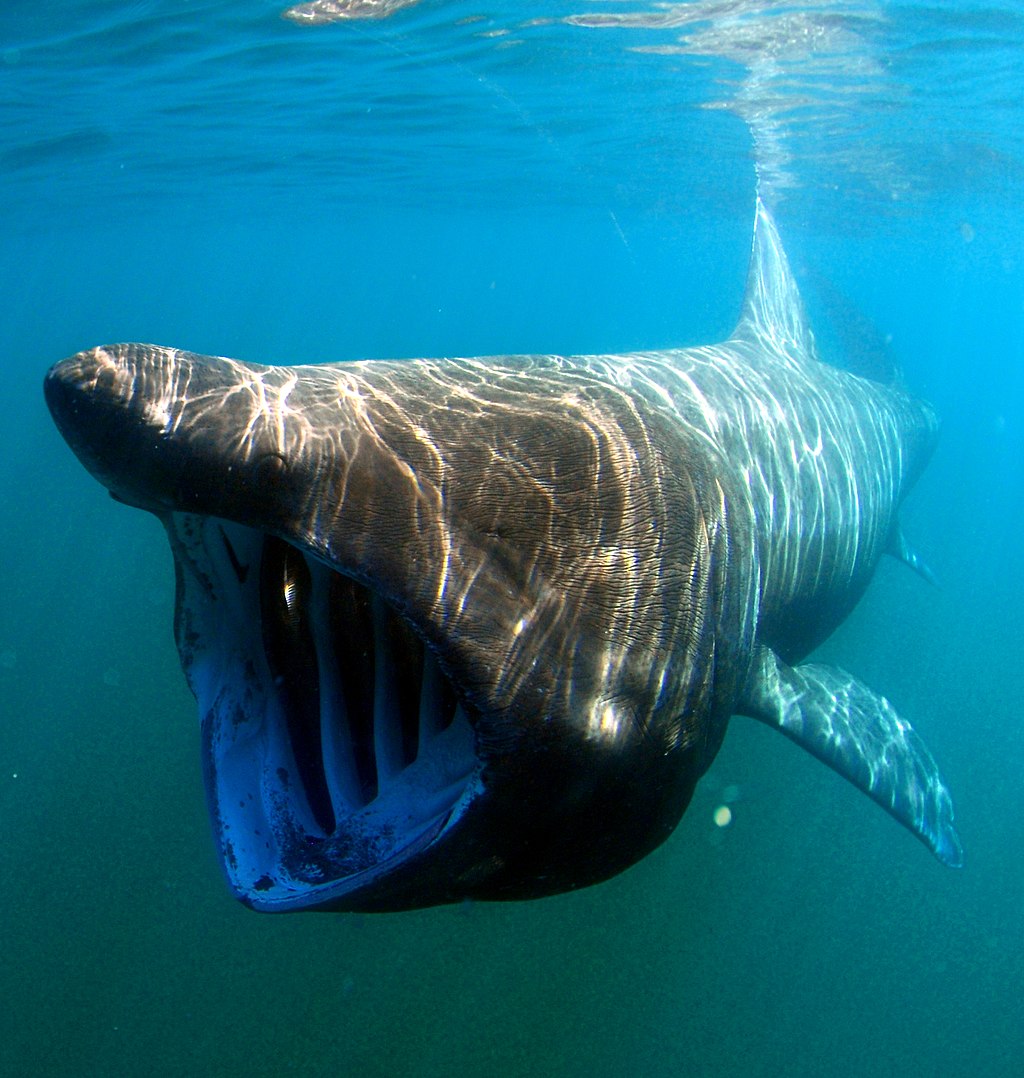
https://en.wikipedia.org/wiki/Basking_shark
In conclusion while Shark week does teach the general public a lot about sharks it also forgets to tell them a lot of important things and instead portrays them at there worst.
http://newsmaine.net/19049-modern-sharks-not-prehistoric-ancestor
form - studio camera so it wouldn't be handheld and will be on something.
coloured
music/sound?: no sound just the hosts talking/debating sharks.
One of the biggest debates about shark week is the megalodon - its believed to be extinct but there is a lot of opposition to this statement, people who oppose this statement argue that because we have only actually explored 20% of the worlds oceans, its actually possible that the Megalodon still exists - the other unexplored 80% is simply to deep for us or any of our technology to withstand the pressure. some animals and fossils have only been found because they have been washed up or caught accidentally. an example of this would be the blob fish or the cyclops shark.
The argument that supports the statement that any reported sightings are actually submarine sharks.
https://en.wikipedia.org/wiki/Megalodon

The blog fish lives between 2,000 and 3,900 ft - the pressure is between 60 times to 120 times more than at sea level.The blob fish's jelly like body has a density less than water which allows it to float. This is not actually a problem for the blob fish because it only eats whatever swims in front of its mouth.

The cyclops shark isn't actually a separate species of shark even though they are extremely rare. they are born form normal sharks they just haven't developed properly in the womb. In fact there have been very few times that cyclops sharks have been observed at all and all of those times where when they were in the womb, this suggests that they don't usually survive long after they are born. In fact the one observed and photographed earlier this year, the first time a cyclops shark was observed outside the womb, was because its mother was caught accidentally.
Some example of other creatures that live in the deep are:
Marine Hatchet Fish


Goblin Sharks
Giant Squid
Frilled Shark

Common Fangtooth

Stop Light Loose Jaw

http://www.sparknotes.com/mindhut/2014/12/08/the-10-most-terrifying-deep-sea-creatures/slide/6

No comments:
Post a Comment